

Written by Lucas Hernández
Founder of Financial Boost Guide
Last Updated: July 2026
Reading Time: 8–10 minutes
Financial Boost Guide provides beginner-friendly educational content about investing, personal finance, saving money, and building long-term wealth.
➡️ Learn more about our mission on our About page.
When people think about investing, they often picture rising stock prices, growing portfolios, and positive financial news.
These periods of sustained growth are known as prolonged market rallies, and they have played a major role in building long-term wealth for investors throughout history.
Bull markets are characterized by increasing asset prices, strong investor confidence, and optimism about the future of the economy.
During these periods, businesses often report growing profits, unemployment remains relatively low, and consumers continue spending, creating favorable conditions for financial markets.
Although these periods of growth can last for years, they do not continue forever.
Eventually, economic conditions change, investor sentiment shifts, and market cycles enter new phases.
Understanding how bull markets work can help investors make smarter decisions and avoid becoming overconfident during periods of rapid growth.
In this guide, you’ll learn:
- What a bull market is.
- What causes bull markets.
- How long bull markets usually last.
- Historical examples of famous bull markets.
- Strategies investors can use during rising markets.
- Whether bull markets still matter in 2026.
By the end of this article, you’ll understand why bull markets have historically created some of the greatest opportunities for long-term investors while also presenting unique risks that should not be ignored.
Table of Contents
What Is a Bull Market?
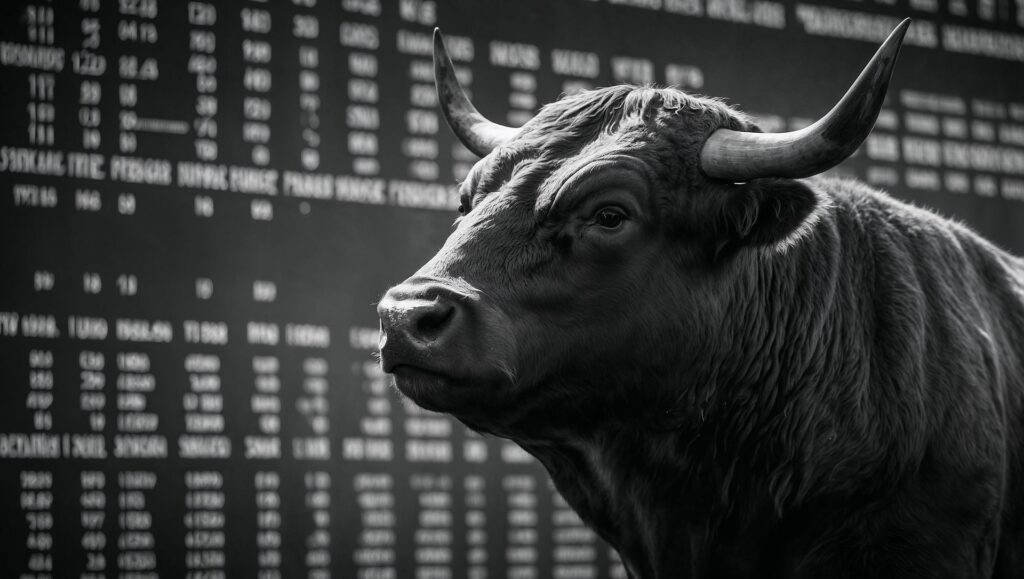
A bull market is a prolonged period in which the prices of financial assets rise consistently over time.
In the stock market, a bull market is generally recognized when major indexes, such as the S&P 500, increase by at least 20% from their most recent lows and continue showing strong upward momentum.
Bull markets can occur in different asset classes, including:
- Stocks
- Bonds
- Real estate
- Commodities
- Cryptocurrencies
However, the term is most commonly associated with rising stock markets.
Why Is It Called a Bull Market?
The name comes from the way a bull attacks.
A bull thrusts its horns upward, symbolizing rising prices and positive market momentum.
By contrast, a bear attacks by swiping its paws downward, which is why declining markets are known as bear markets.
These two animals have become universal symbols of market cycles.
Characteristics of a Bull Market
Although every cycle is different, most bull markets share several common characteristics:
- Rising stock prices
- Strong investor confidence
- Positive economic growth
- Increasing corporate profits
- Low unemployment
- Higher consumer spending
These conditions often encourage more people to invest, creating additional demand for financial assets.
Bull Markets Can Last for Years
Unlike short-term rallies, bull markets often continue for several years.
While temporary pullbacks and corrections are normal, the overall trend remains upward as long as investor confidence and economic conditions remain favorable.
Bull Markets Reward Patient Investors
Historically, many of the largest gains in the stock market have occurred during long-lasting periods of growth.
Investors who remain focused on long-term goals rather than short-term market fluctuations have often benefited the most from these extended periods of rising prices.
What Causes a Bull Market?
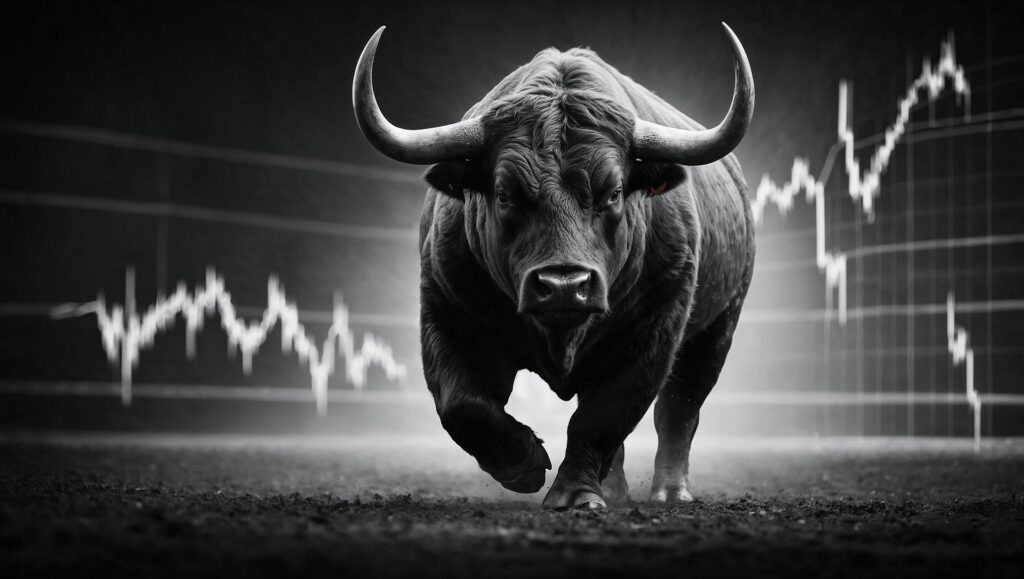
Bull markets do not happen by chance.
They are usually driven by a combination of economic growth, improving business conditions, and growing investor confidence.
While every market cycle is different, several factors have consistently contributed to long periods of rising prices.
1. Strong Economic Growth
A healthy economy is one of the biggest drivers of a bull market.
As businesses expand and consumers spend more money, company revenues and profits often increase.
This positive environment encourages investors to buy stocks, pushing prices higher.
2. Rising Corporate Earnings
Companies that consistently increase their profits often attract more investors.
When businesses report strong earnings, shareholders become more confident about future growth.
Higher corporate profits are one of the main reasons stock prices rise during bull markets.
3. Low Interest Rates
Lower interest rates reduce borrowing costs for businesses and consumers.
Companies can invest in expansion more easily, while consumers are more likely to spend money on homes, cars, and other purchases.
Low interest rates also make stocks more attractive compared to savings accounts or bonds.
4. High Investor Confidence
Bull markets are often supported by positive investor sentiment.
When investors believe the economy will continue growing, they are more willing to buy financial assets.
This increased demand can create a cycle where rising prices attract even more buyers.
5. Innovation and New Industries
Technological advances and the emergence of new industries have often fueled some of history’s strongest bull markets.
Examples include:
- The rise of the internet.
- Artificial intelligence.
- Cloud computing.
- Renewable energy.
- Biotechnology.
Companies leading these sectors can experience rapid growth, helping drive the overall market higher.
6. Stable Inflation and Employment
Bull markets are more likely to develop when inflation remains under control and unemployment stays relatively low.
Stable economic conditions allow businesses to grow while giving consumers greater confidence to spend and invest.
Several Factors Usually Drive Market Growth
There is rarely a single reason why markets rise for several years.
Instead, long periods of rising prices typically result from a combination of strong economic fundamentals, growing corporate profits, supportive monetary policies, and optimistic investor sentiment.
Understanding these factors can help investors recognize why markets move upward and make more informed long-term investment decisions.
How Long Do Bull Markets Usually Last?

One of the most common questions investors ask is how long a bull market can continue.
The truth is that no one can predict exactly when a rising market will end.
Every market cycle is different and is influenced by economic conditions, investor sentiment, corporate earnings, and global events.
Historical Average Duration
Historically, periods of sustained market growth have lasted much longer than market downturns.
In the US stock market, many bull markets have continued for four to seven years, while some have lasted even longer.
Although temporary pullbacks and corrections are common, the overall upward trend can remain intact for an extended period.
Market Growth Never Moves in a Straight Line
Even during long periods of growth, markets experience short-term declines.
These temporary corrections are a normal part of investing and do not necessarily signal the end of an upward trend.
Experienced investors understand that volatility is unavoidable, even in strong markets.
The Longest Market Rallies in History
Several of the longest market rallies have delivered exceptional returns for investors.
For example:
- The bull market that followed the 2008 financial crisis lasted for more than a decade.
- The technology boom during the 1990s created one of the strongest periods of market growth in history.
These examples show how powerful long-term market trends can become when supported by strong economic conditions.
What Brings a Strong Market Rally to an End?
Bull markets usually end when economic conditions begin to weaken.
Some common warning signs include:
- Rising interest rates
- Slowing corporate earnings
- High inflation
- Economic recessions
- Declining investor confidence
These factors can gradually reduce demand for financial assets and eventually lead to a new market cycle.
Long-Term Investors Focus on the Bigger Picture
Although every bull market eventually comes to an end, history shows that financial markets have continued to grow over the long run.
Rather than trying to predict the exact peak, many successful investors remain focused on long-term goals, maintain diversified portfolios, and continue investing through different market cycles.
Historical Examples of Strong Market Rallies

Throughout history, financial markets have experienced several remarkable bull markets that generated significant wealth for long-term investors.
Although each period was driven by different economic conditions, they all shared one common characteristic: sustained growth over an extended period.
Studying these historical examples can help investors understand how powerful long-term market trends can become.
The Post-World War II Expansion (1949–1956)
Following World War II, the United States entered a period of rapid economic growth.
Industrial production increased, consumer spending surged, and businesses expanded quickly.
The stock market benefited from this strong economic recovery, creating one of the first major post-war bull markets.
The Technology Boom of the 1990s
One of the most famous periods of market growth occurred during the 1990s.
Rapid advances in computers, the internet, and telecommunications fueled strong economic growth and rising corporate earnings.
Technology companies attracted enormous investor interest, helping major stock indexes reach record highs.
Although the Dot-Com Bubble eventually burst in 2000, many companies that emerged during this period became some of the world’s largest businesses.
The Recovery After the 2008 Financial Crisis
Following the Global Financial Crisis, financial markets entered one of the longest periods of sustained growth in history.
Low interest rates, economic recovery, and strong corporate profits supported rising stock prices for more than a decade.
Many broad market indexes reached new all-time highs during this period.
The S&P 500 reached multiple record highs during this period.
The Post-Pandemic Recovery
After the sharp market decline caused by COVID-19 in 2020, financial markets recovered much faster than many investors expected.
Government stimulus programs, low interest rates, and improving economic conditions helped fuel another strong period of market growth.
Technology companies played a major role in leading this recovery.
Lessons From Historical Market Rallies
Although every market cycle is different, several patterns appear repeatedly:
- Economic growth often supports rising markets.
- Innovation creates new investment opportunities.
- Investor confidence encourages additional buying.
- Long-term investors generally benefit from remaining invested.
- Temporary market corrections are normal, even during strong upward trends.
History Rewards Patient Investors
One of the most important lessons from previous bull markets is that patience often produces better results than trying to predict short-term market movements.
Investors who remain disciplined, continue investing consistently, and focus on long-term goals have historically benefited from extended periods of market growth.
What Should Investors Do During a Bull Market?

Bull markets can generate excitement and strong investment returns, but they can also encourage overconfidence and unnecessary risk-taking.
A disciplined approach can help investors benefit from rising markets while remaining prepared for future market changes.
1. Stick to Your Investment Plan
One of the biggest mistakes investors make during a bull market is abandoning their long-term strategy because markets continue moving higher.
Instead of chasing short-term gains, continue following your investment plan and financial goals.
2. Keep Investing Consistently
Many investors continue investing through regular contributions, regardless of market conditions.
Consistent investing allows you to build wealth over time without trying to predict short-term price movements.
Strategies such as dollar-cost averaging remain effective even when markets are rising.
3. Avoid Chasing Overpriced Stocks
During periods of optimism, some stocks become significantly overvalued.
Buying investments simply because they have recently increased in price can expose investors to unnecessary risk.
Always evaluate a company’s fundamentals before making investment decisions.
4. Rebalance Your Portfolio
Strong market performance may increase the percentage of stocks in your portfolio beyond your original target.
Reviewing and rebalancing your portfolio periodically helps maintain the level of risk that matches your investment objectives.
5. Stay Diversified
Even during strong market conditions, diversification remains important.
Holding different asset classes, industries, and geographic regions can reduce portfolio risk if market conditions suddenly change.
A diversified portfolio is often more resilient over the long term.
6. Prepare for Future Market Corrections
Bull markets do not last forever.
Temporary corrections and new market cycles are normal parts of investing.
Investors who prepare in advance are often less likely to make emotional decisions when markets eventually decline.
Long-Term Discipline Wins
History shows that the most successful investors are rarely those who perfectly time the market.
Instead, they focus on building diversified portfolios, investing consistently, and maintaining discipline through both rising and falling markets.
A successful investment strategy should be able to perform across every stage of the market cycle, not only during periods of strong growth.
Do Bull Markets Still Matter in 2026?
Financial markets have evolved significantly over the past decade.
Artificial intelligence, algorithmic trading, and commission-free investing have changed the way people buy and sell assets.
Despite these innovations, periods of sustained market growth remain just as important for investors today as they were in the past.
Economic Growth Still Drives Financial Markets
Strong economies continue to support rising stock prices.
When businesses increase profits, unemployment remains low, and consumer spending stays healthy, investors generally become more confident about future growth.
These conditions often create favorable environments for long-term investment returns.
Technology Has Changed Investing, Not Market Cycles
Modern technology allows investors to access financial markets more easily than ever before.
With just a smartphone, investors can buy stocks, ETFs, index funds, and other assets from almost anywhere in the world.
However, technology has not eliminated the natural cycles of expansion and contraction that financial markets experience.
Investor Psychology Remains the Same
Although trading platforms have become more advanced, human emotions continue to influence investment decisions.
Optimism often encourages investors to buy more assets during periods of growth, while fear can cause panic selling during market declines.
Understanding these emotional patterns is just as important today as it has always been.
Opportunities Continue to Exist
Periods of sustained growth create opportunities for investors to build wealth through long-term investing.
Companies can expand their businesses, increase earnings, and reward shareholders through capital appreciation and dividends.
Investors who remain disciplined often benefit from these favorable market conditions.
Staying Focused on Long-Term Goals
Successful investors understand that rising markets are only one part of the investing journey.
Maintaining a diversified portfolio, reviewing investment goals regularly, and avoiding emotional decisions can help investors navigate both positive and negative market environments.
Strong Markets Still Matter
While investing tools continue to improve, the importance of long-term market growth has not changed.
Investors who understand how these periods work are often better prepared to make informed decisions, manage risk, and build wealth over time.
Frequently Asked Questions
What is a bull market?
A bull market is a prolonged period during which financial asset prices rise by 20% or more from recent lows. It is typically accompanied by strong investor confidence and positive economic conditions.
How long does a bull market usually last?
Although every market cycle is different, bull markets have historically lasted several years. Some of the longest have continued for more than a decade.
What causes a bull market?
Bull markets are usually driven by strong economic growth, rising corporate earnings, low interest rates, improving investor confidence, and innovation across key industries.
Is it safe to invest during a bull market?
Investing during a bull market can still be beneficial, but investors should avoid chasing overpriced assets and continue following a long-term investment strategy.
Can a bull market end suddenly?
Yes. Rising inflation, higher interest rates, economic recessions, or unexpected global events can bring an end to a bull market and lead to a new market cycle.
Should I keep investing during a bull market?
Many long-term investors continue investing regularly regardless of market conditions. Consistent investing can help build wealth over time without trying to predict market movements.
What is the difference between a bull market and a bear market?
A bull market is characterized by rising prices and optimism, while a bear market involves falling prices, weaker investor confidence, and increased uncertainty.
Conclusion
Bull markets have historically created some of the greatest opportunities for long-term investors.
Periods of sustained economic growth, rising corporate earnings, and increasing investor confidence have helped financial markets reach new highs throughout history.
However, successful investing is not about assuming prices will always rise.
Maintaining discipline, staying diversified, and following a long-term strategy are essential regardless of current market conditions.
Understanding how these periods work allows investors to make better decisions, manage risk more effectively, and avoid emotional mistakes.
While no market trend lasts forever, history shows that patient investors who remain focused on their financial goals are often rewarded over time.
Whether markets are rising or falling, building a well-balanced portfolio and investing consistently remain two of the most reliable ways to create long-term wealth.
About the Author
Lucas Hernández is the founder of Financial Boost Guide, a website dedicated to making investing and personal finance easier to understand for beginners.
He creates practical, well-researched guides that help readers build better financial habits, understand investing with confidence, and make informed financial decisions.
Every article is written with a focus on clarity, accuracy, and long-term educational value.
➡️ Learn more about Lucas and our editorial process on the About page.
Disclaimer: The information provided in this article is for educational purposes only and should not be considered financial, investment, legal, or tax advice. Always conduct your own research or consult a qualified professional before making financial decisions.