
Written by Lucas Hernández
Founder of Financial Boost Guide
Last Updated: July 2026
Reading Time: 8–10 minutes
Financial Boost Guide provides beginner-friendly educational content about investing, personal finance, saving money, and building long-term wealth.
➡️ Learn more about our mission on our About page.
When comparing investments, many people focus only on the total return.
While knowing how much an investment has grown is important, it does not always provide the full picture.
For example, imagine two investments both doubled in value. If one achieved that growth in five years and the other took ten years, they clearly did not perform at the same pace.
This is where CAGR becomes an essential financial metric.
Compound Annual Growth Rate (CAGR) measures the average annual rate at which an investment grows over a specific period, assuming its value increases at a steady rate.
Although real investments rarely grow at the same pace every year, CAGR provides a simple way to compare the long-term performance of different assets.
Investors commonly use this metric when evaluating:
- Stocks
- ETFs
- Index funds
- Mutual funds
- Investment portfolios
- Business revenue growth
Understanding CAGR can help you compare investment opportunities more accurately, evaluate historical performance, and make better long-term financial decisions.
In this guide, you’ll learn:
- What CAGR means.
- How it is calculated.
- Why investors use it.
- Its advantages and limitations.
- Common mistakes to avoid.
- Why CAGR continues to be an important investing metric in 2026.
By the end of this article, you’ll understand how this simple calculation can help you evaluate investment performance more effectively and make smarter financial decisions.
Table of Contents
What Is CAGR?

CAGR stands for Compound Annual Growth Rate.
It measures the average annual rate of return of an investment over a specific period, assuming that the investment grows at a constant rate each year.
Although real investments rarely increase by the same percentage every year, CAGR provides a standardized way to compare long-term performance across different assets.
For this reason, it is widely used by investors, financial analysts, and businesses.
Why Is CAGR Important?
Looking only at an investment’s total return can sometimes be misleading.
Two investments may generate the same overall profit but achieve those results over very different periods.
By calculating the average yearly growth, investors gain a clearer understanding of how efficiently an investment has performed over time.
What Can CAGR Be Used For?
This metric is commonly used to evaluate:
- Stock performance
- ETFs
- Index funds
- Mutual funds
- Investment portfolios
- Company revenue growth
- Business profits
Because it uses an annualized growth rate, it allows investors to compare different investments on an equal basis.
A Simple Example
Imagine you invest $10,000.
After 5 years, your investment is worth $16,000.
Instead of calculating the total return alone, CAGR estimates the average annual growth rate that would produce the same final result if growth had occurred steadily each year.
This makes it much easier to compare that investment with another one held for a different number of years.
A Useful Tool for Long-Term Investors
CAGR is one of the most useful metrics for evaluating historical investment performance.
While it does not predict future returns, it provides a consistent way to measure growth over time and compare different investment opportunities using the same methodology.
How Is CAGR Calculated?

Although the name may sound technical, calculating CAGR is relatively straightforward.
The formula determines the average annual growth rate of an investment over a specific period, assuming growth occurred at a steady pace.
The CAGR Formula
The formula is:
CAGR = (Ending Value ÷ Beginning Value)^(1 ÷ Number of Years) − 1
This calculation converts the total return into an annualized percentage, making it much easier to compare investments with different holding periods.
Example Calculation
Suppose you invested $10,000.
After 5 years, your investment is worth $16,000.
Using the formula:
- Beginning Value = $10,000
- Ending Value = $16,000
- Time Period = 5 years
The calculation is:
CAGR = (16,000 ÷ 10,000)^(1 ÷ 5) − 1
The result is approximately:
CAGR = 9.86% per year
This means your investment grew at an average annual rate of 9.86%, even if the actual yearly returns were different.
Why Annualized Returns Matter
Investments rarely produce the same return every year.
One year may generate a gain of 20%, while another experiences a decline.
By converting overall performance into an average yearly growth rate, investors can compare different assets using the same measurement.
This makes evaluating stocks, ETFs, index funds, and mutual funds much easier.
Using Online CAGR Calculators
Many financial websites provide free CAGR calculators.
These tools automatically calculate the annual growth rate after you enter:
- Initial investment value
- Final investment value
- Number of years
Although calculators save time, understanding the formula helps investors interpret the results more confidently.
A Simple Formula With Powerful Insights
The calculation may appear simple, but it provides valuable information about long-term investment performance.
Rather than focusing only on total returns, investors can better understand how efficiently an investment has grown over time and compare multiple opportunities more accurately.
Why CAGR Matters for Investors

Successful investing is not only about generating positive returns but also about understanding how investments perform over time.
CAGR gives investors a standardized way to compare growth across different assets, even when they have been held for different lengths of time.
For this reason, it has become one of the most widely used financial metrics in long-term investing.
It Makes Investment Comparisons Easier
One of the biggest advantages of CAGR is that it allows investors to compare multiple investments fairly.
For example, two portfolios may have generated similar total returns, but one may have achieved those results much faster.
Using an annualized growth rate makes these comparisons much more meaningful.
It Focuses on Long-Term Performance
Short-term market movements can be unpredictable.
Daily and monthly price changes often create noise that makes it difficult to evaluate an investment objectively.
By focusing on average annual growth over several years, investors gain a clearer picture of long-term performance.
It Helps Evaluate Different Asset Types
This metric can be used to compare many types of investments, including:
- Stocks
- ETFs
- Index funds
- Mutual funds
- Real estate
- Business revenue
Using the same calculation across different assets helps investors identify which investments have historically delivered stronger long-term growth.
It Supports Better Financial Planning
Many investors use CAGR when setting financial goals.
Knowing the average annual growth of an investment can help estimate how long it may take to reach a target portfolio value or retirement objective.
Although future returns are never guaranteed, historical growth rates can provide useful reference points for planning.
It Works Well Alongside Other Metrics
While CAGR is extremely useful, it should never be used on its own.
Experienced investors also consider:
- Risk
- Volatility
- Dividend income
- Cash flow
- Valuation
- Economic conditions
Combining multiple financial metrics provides a more complete understanding of an investment before making a decision.
A Valuable Tool for Every Investor
Whether you are a beginner or an experienced investor, understanding CAGR can improve the way you evaluate investment performance.
It simplifies comparisons, highlights long-term growth trends, and supports more informed financial decisions without focusing only on short-term market fluctuations.
Advantages and Limitations of CAGR
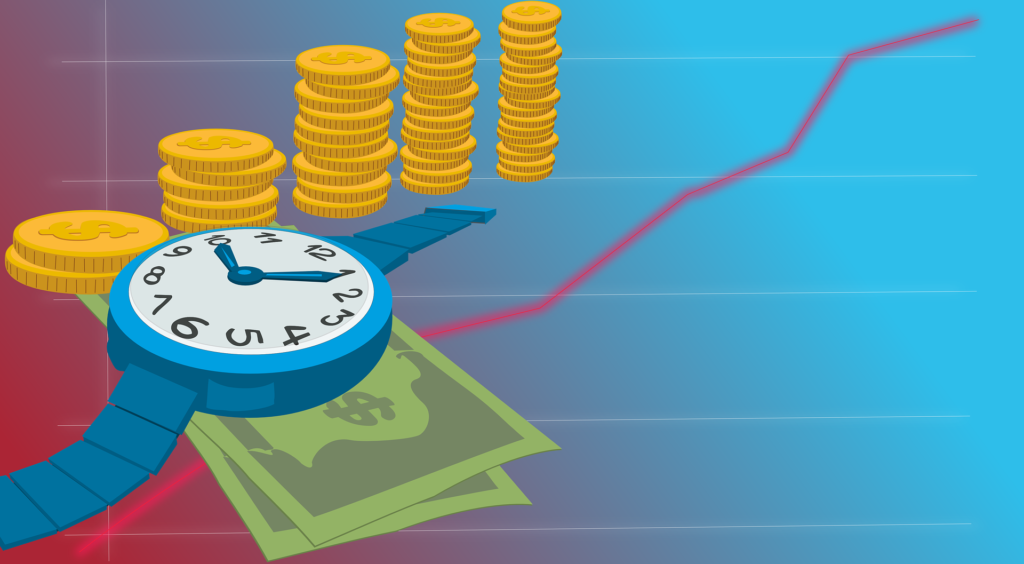
Like every financial metric, CAGR has both strengths and weaknesses.
While it is one of the most useful tools for measuring long-term investment growth, it should always be interpreted alongside other financial indicators.
Understanding both its advantages and limitations helps investors make more informed decisions.
Advantages of CAGR
1. Easy to Compare Investments
One of the biggest advantages is that it allows investors to compare investments with different time horizons.
Instead of looking only at total returns, investors can evaluate the average yearly growth of each investment using the same measurement.
2. Simplifies Long-Term Analysis
Investment performance can vary significantly from one year to another.
By expressing growth as an annual average, CAGR provides a much clearer picture of long-term results.
This makes it easier to evaluate portfolios, funds, and individual stocks.
3. Useful for Financial Planning
Many investors use CAGR when estimating future portfolio growth.
Although it does not predict future returns, it provides a realistic benchmark based on historical performance.
This can be helpful when planning retirement, saving for major financial goals, or comparing different investment strategies.
4. Widely Used by Financial Professionals
Investment managers, analysts, and financial advisors frequently use this metric because it offers a consistent way to evaluate historical performance across different asset classes.
Limitations of CAGR
1. Assumes Constant Growth
The biggest limitation is that CAGR assumes investments grow at a steady annual rate.
In reality, markets rarely move in a straight line.
Most investments experience years of gains, losses, and periods of volatility.
2. Ignores Investment Risk
Two investments may produce exactly the same annualized return while exposing investors to very different levels of risk.
For this reason, CAGR should always be considered together with measurements such as volatility and maximum drawdown.
3. Does Not Show Market Fluctuations
Because it focuses only on the beginning and ending values, this calculation hides what happened between those two points.
An investment may have experienced significant price swings even if its average annual growth appears stable.
4. Should Never Be Used Alone
No single financial metric can fully evaluate an investment.
Experienced investors combine CAGR with other indicators such as:
- Revenue growth
- Profitability
- Valuation
- Cash flow
- Risk
- Diversification
Using multiple metrics provides a much more complete picture before making investment decisions.
The Best Way to Use CAGR
CAGR works best as part of a broader investment analysis.
Rather than relying on it alone, investors should combine it with other financial metrics to better understand both growth potential and investment risk over the long term.
Common Mistakes When Using CAGR

CAGR is an excellent tool for measuring long-term investment growth, but many investors misunderstand how it should be used.
Avoiding these common mistakes will help you evaluate investments more accurately and make better financial decisions.
1. Looking Only at CAGR
One of the biggest mistakes is using CAGR as the only measurement when comparing investments.
Although it provides valuable information about average annual growth, it does not reveal how much risk was taken to achieve those returns.
Always combine it with other financial metrics before making investment decisions.
2. Ignoring Market Volatility
This calculation assumes growth occurred at a steady annual rate.
In reality, financial markets experience periods of strong gains, sharp declines, and temporary corrections.
An investment with a high average return may still have experienced significant volatility along the way.
3. Comparing Different Time Periods
Comparing investments over different periods can produce misleading conclusions.
For example, comparing a portfolio’s five-year growth with another investment’s two-year performance does not provide a fair comparison.
Whenever possible, use the same time frame for every investment being analyzed.
4. Assuming Past Performance Predicts Future Results
Historical growth can provide useful insights, but it does not guarantee future returns.
Economic conditions, company performance, interest rates, and market sentiment can all influence future investment results.
Investors should always consider future risks alongside historical data.
5. Forgetting Other Important Factors
Average annual growth is only one part of a complete investment analysis.
Before investing, it is also important to evaluate:
- Risk
- Diversification
- Financial strength
- Competitive advantages
- Industry trends
- Valuation
Looking at multiple factors provides a much clearer picture of an investment’s long-term potential.
Use CAGR as Part of a Bigger Picture
CAGR works best when combined with other financial metrics.
Rather than relying on a single number, successful investors evaluate growth, risk, profitability, and overall business quality before making investment decisions.
Does CAGR Still Matter in 2026?
Financial markets have become more accessible than ever.
With commission-free trading platforms, AI-powered investment tools, and instant access to market data, investors have more information at their fingertips than previous generations.
Despite these changes, CAGR remains one of the most useful metrics for evaluating long-term investment performance.
Long-Term Investors Still Rely on It
Many professional investors use CAGR to compare portfolios, mutual funds, ETFs, and individual stocks over several years.
By converting total returns into an average annual growth rate, it becomes much easier to evaluate different investment opportunities fairly.
It Helps Filter Short-Term Noise
Financial markets rarely move in a straight line.
Economic events, interest rate changes, and geopolitical uncertainty can create significant short-term volatility.
Instead of focusing on temporary market movements, CAGR helps investors concentrate on long-term performance.
It Works Best With Other Metrics
Although CAGR is extremely valuable, it should never be the only measurement used when evaluating an investment.
Successful investors also consider:
- Risk
- Volatility
- Valuation
- Dividend income
- Cash flow
- Financial strength
Looking at multiple indicators provides a more complete picture before making investment decisions.
An Essential Tool for Modern Investors
Whether you are building your first portfolio or managing long-term investments, understanding CAGR can improve the way you evaluate performance.
Combined with fundamental analysis and diversification, it remains one of the most useful financial metrics available in 2026.
Frequently Asked Questions
What does CAGR stand for?
CAGR stands for Compound Annual Growth Rate. It measures the average annual growth of an investment over a specific period.
Why is CAGR important?
It allows investors to compare investments with different holding periods using a standardized annual growth rate.
Is CAGR the same as total return?
No.
Total return measures the overall gain or loss of an investment, while CAGR expresses that performance as an average yearly growth rate.
Does CAGR predict future returns?
No.
It only measures historical performance and should not be used to predict future investment results.
Can CAGR be negative?
Yes.
If an investment loses value over time, the calculated annual growth rate will be negative.
Is CAGR useful for stocks and ETFs?
Absolutely.
It is widely used to compare the long-term performance of stocks, ETFs, index funds, mutual funds, and investment portfolios.
Should CAGR be used alone?
No.
It works best when combined with other financial metrics such as risk, volatility, valuation, and profitability.
Conclusion
CAGR is one of the simplest and most effective ways to evaluate long-term investment growth.
By converting total returns into an average annual growth rate, it allows investors to compare different investments more accurately and make better financial decisions.
However, no single metric tells the complete story.
Successful investing requires analyzing growth alongside risk, volatility, financial strength, and overall business performance.
Whether you invest in stocks, ETFs, index funds, or mutual funds, understanding CAGR will help you evaluate investment performance with greater confidence and build a stronger long-term investment strategy in 2026 and beyond.
About the Author
Lucas Hernández is the founder of Financial Boost Guide, a website dedicated to making investing and personal finance easier to understand for beginners.
He creates practical, well-researched guides that help readers build better financial habits, understand investing with confidence, and make informed financial decisions.
Every article is written with a focus on clarity, accuracy, and long-term educational value.
➡️ Learn more about Lucas and our editorial process on the About page.
Disclaimer: The information provided in this article is for educational purposes only and should not be considered financial, investment, legal, or tax advice. Always conduct your own research or consult a qualified professional before making financial decisions.